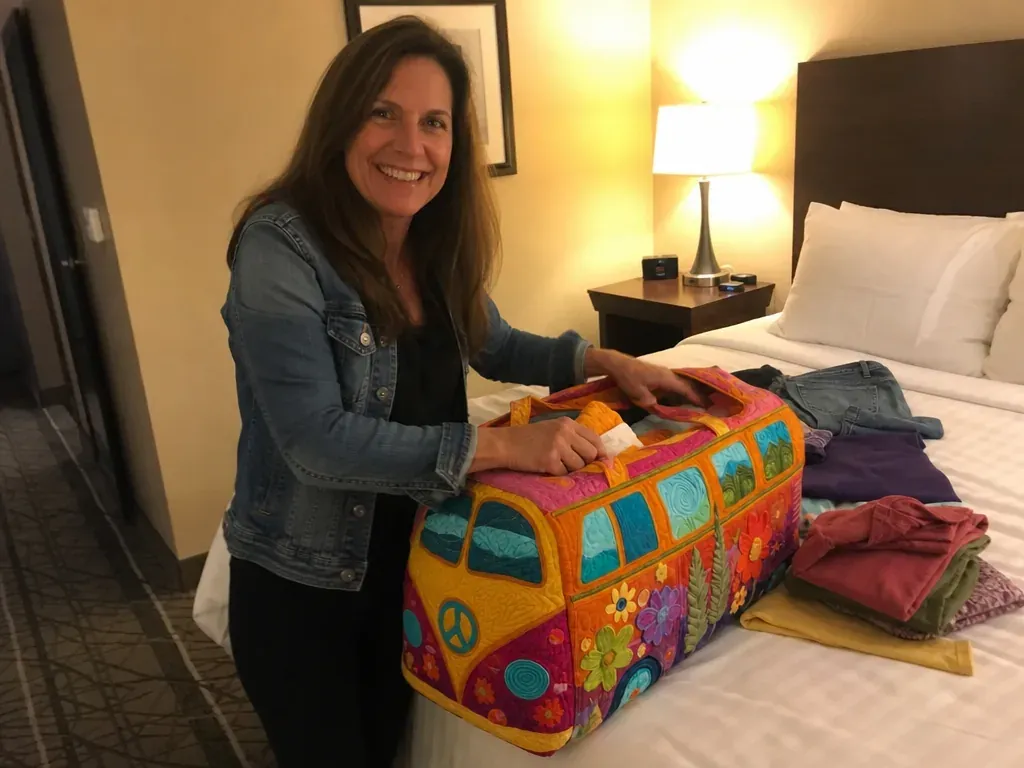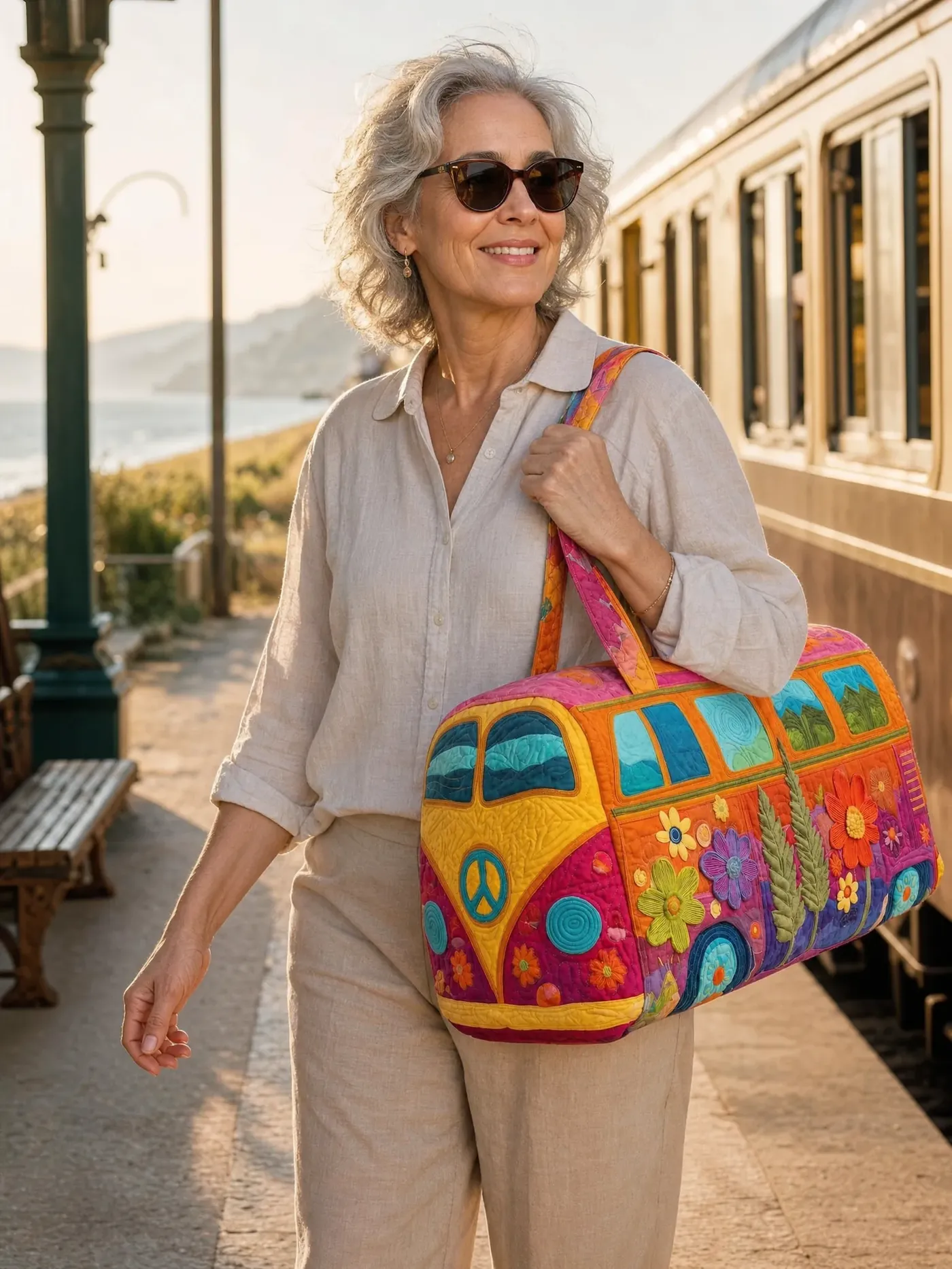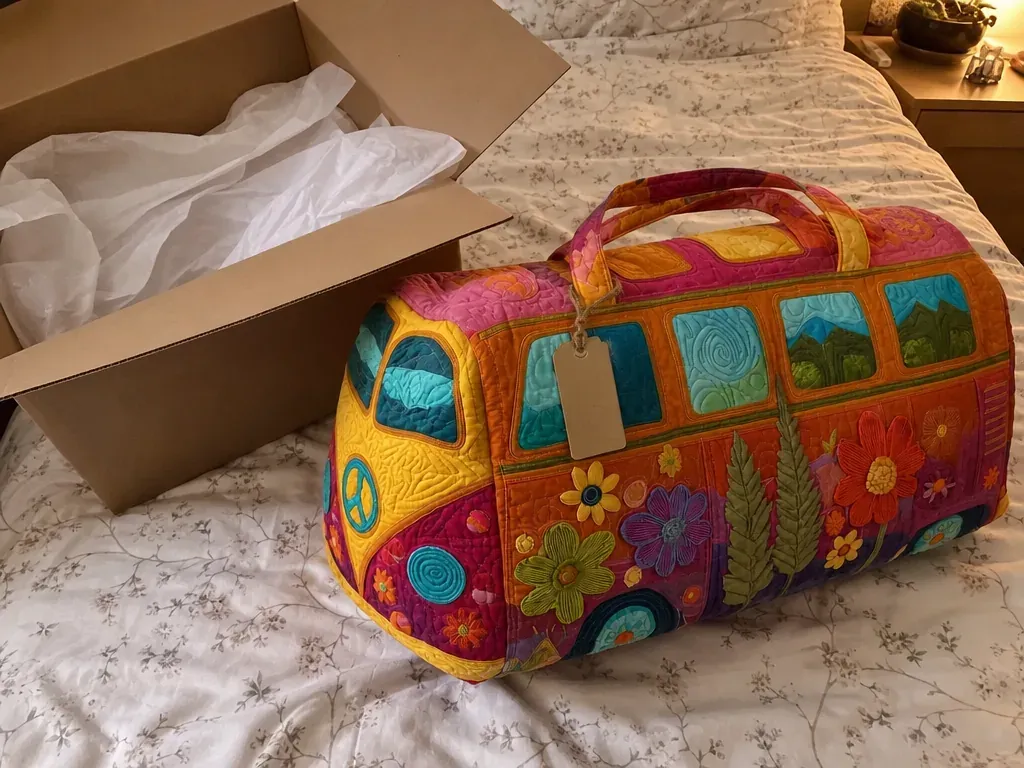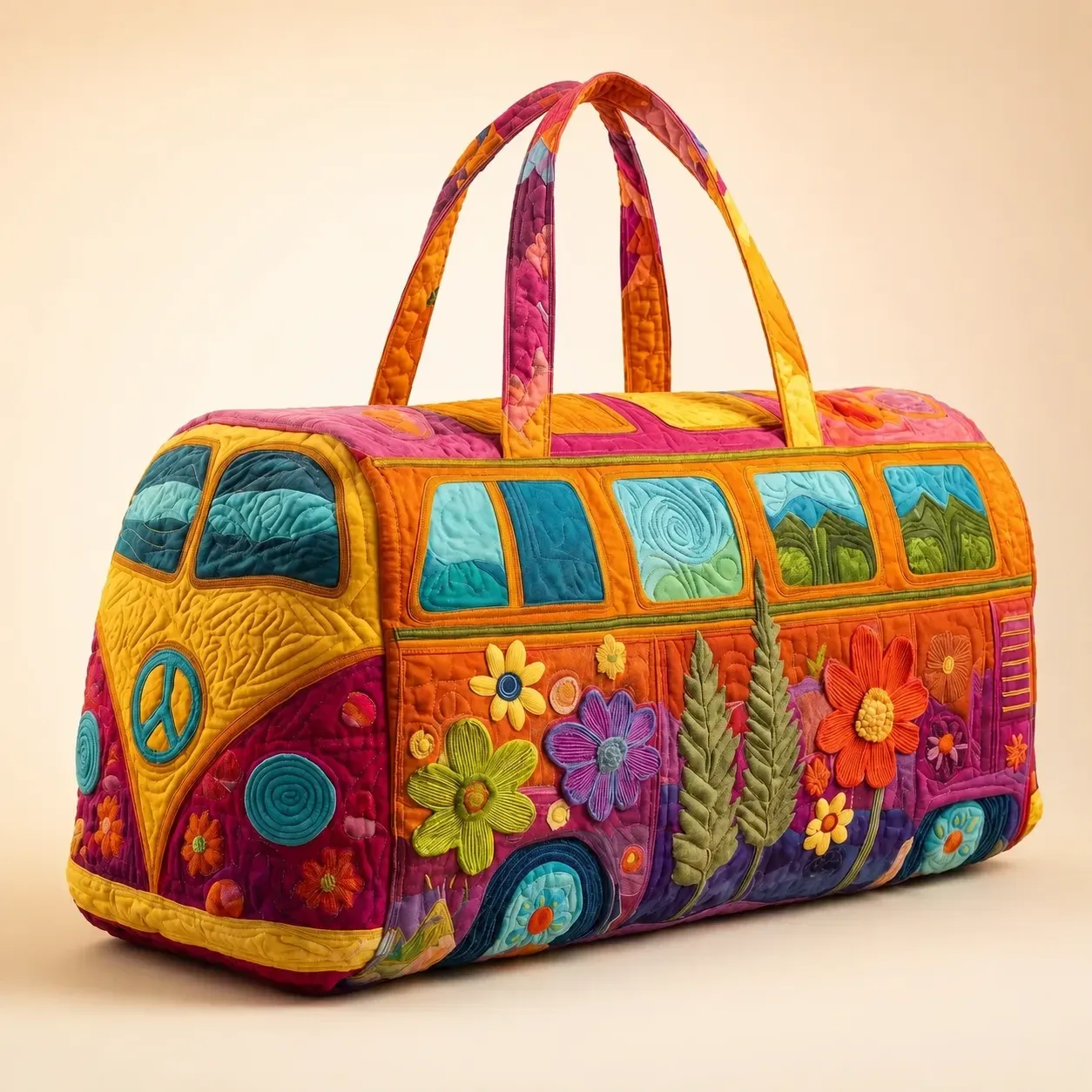
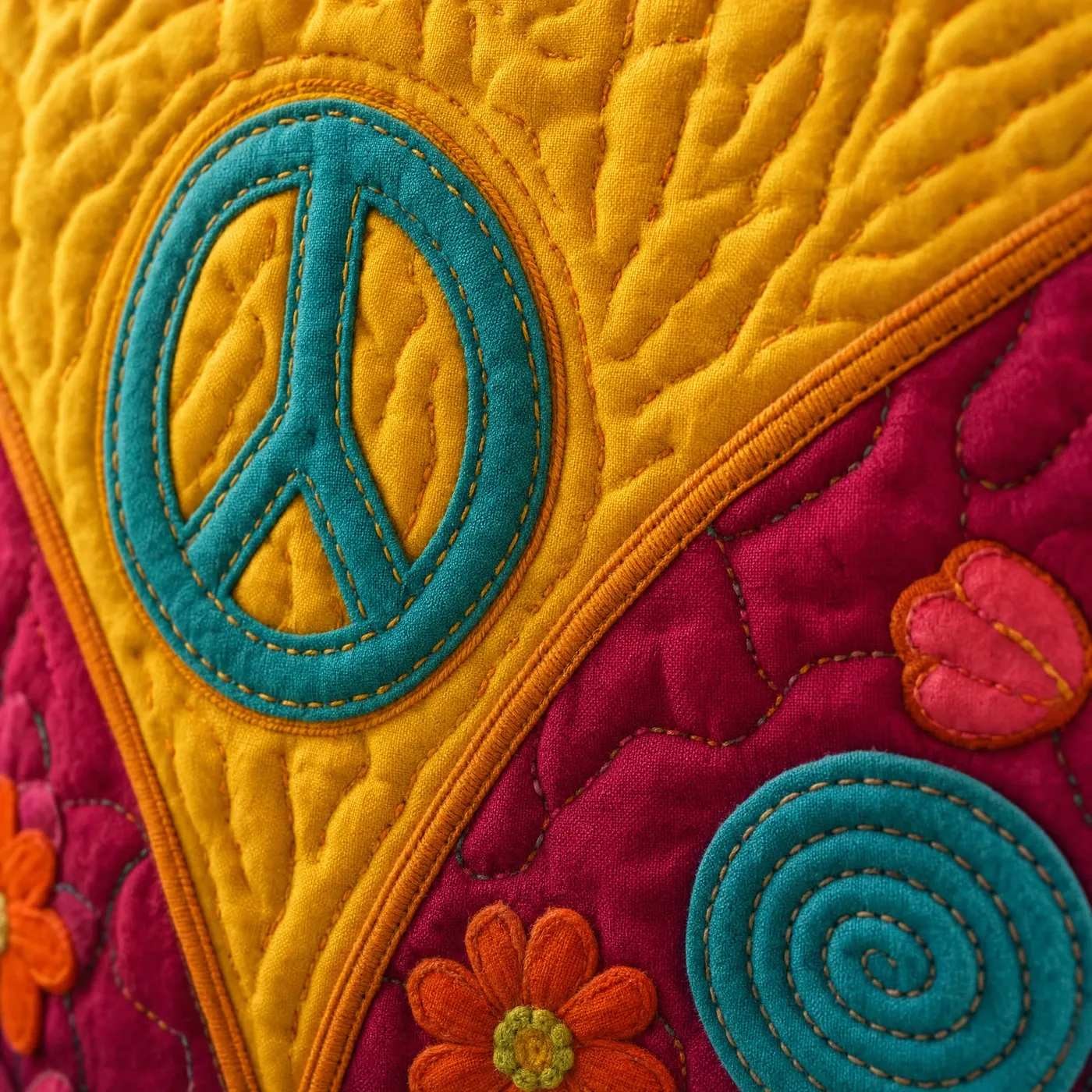
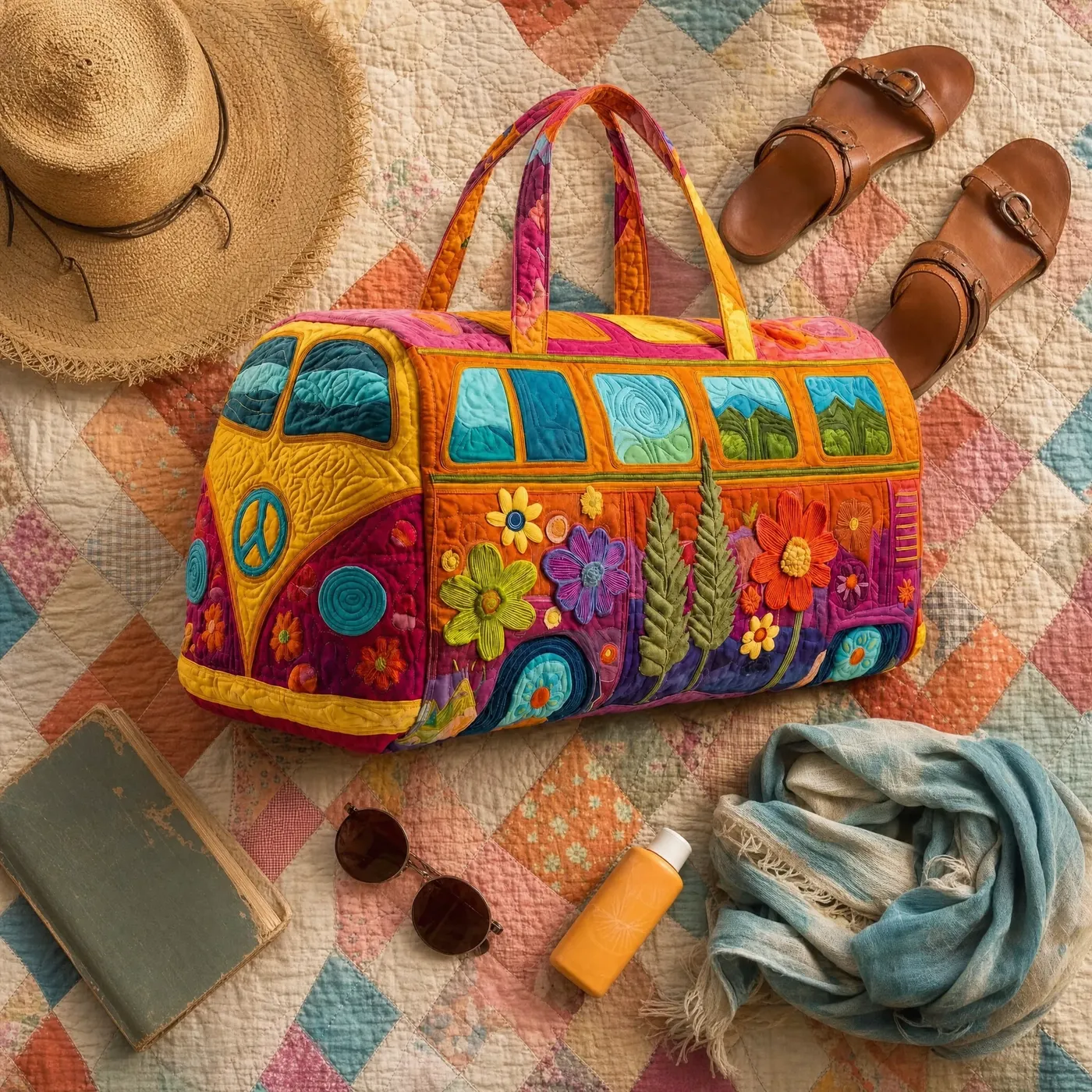
The Story Behind the HippieBus Weekender
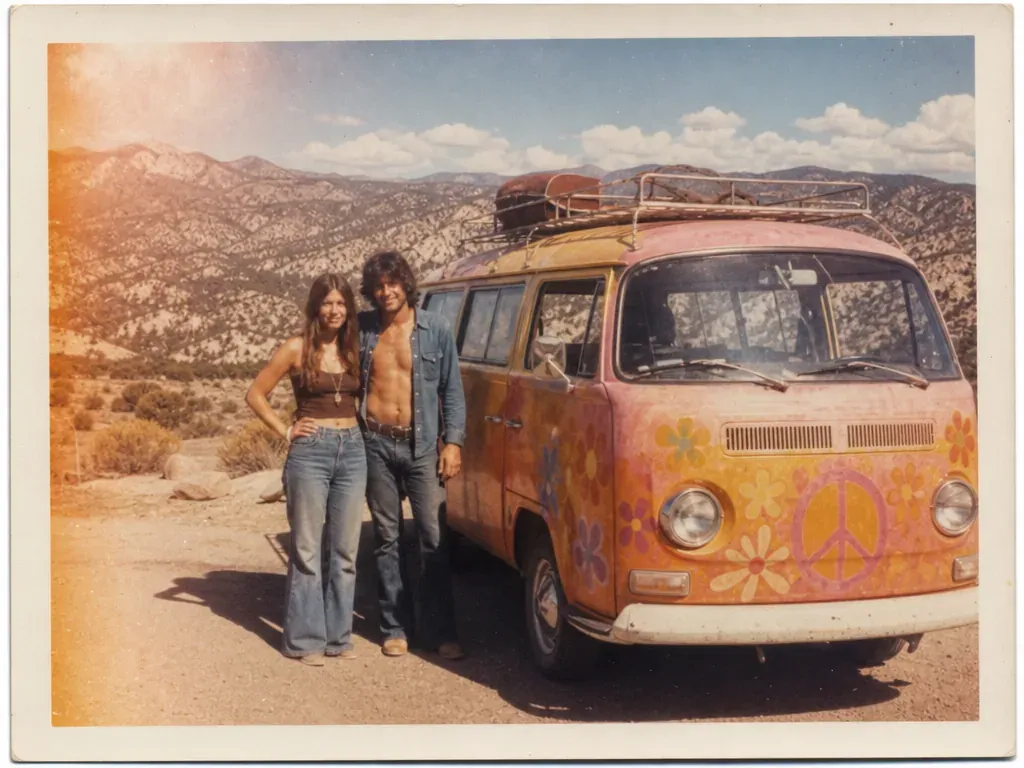
The VW bus was a fitting choice for the HippieBus Weekender. In the 1960s the Microbus came to represent a growing angst in America, and a certain part of society took to traveling around in Microbuses covered with peace signs and flowers. The Smithsonian's road transportation curator Roger White has called it a way of thumbing their noses at the establishment. The first one went into production March 8, 1950, at a Volkswagen plant in West Germany, and people loved that it could haul goods of all kinds, human and otherwise. With a roomy interior and an air-cooled engine, it was easy to operate and maintain.
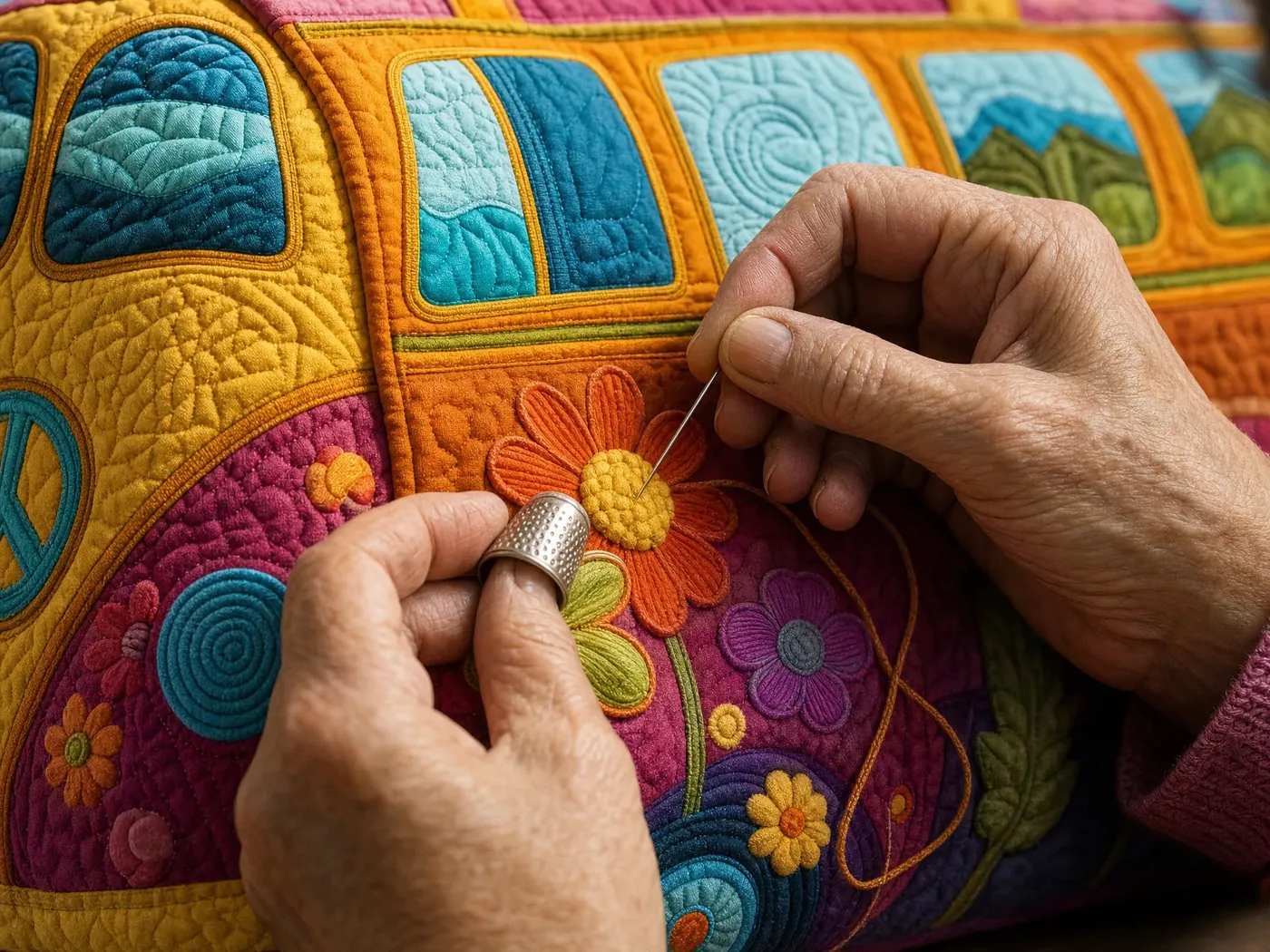
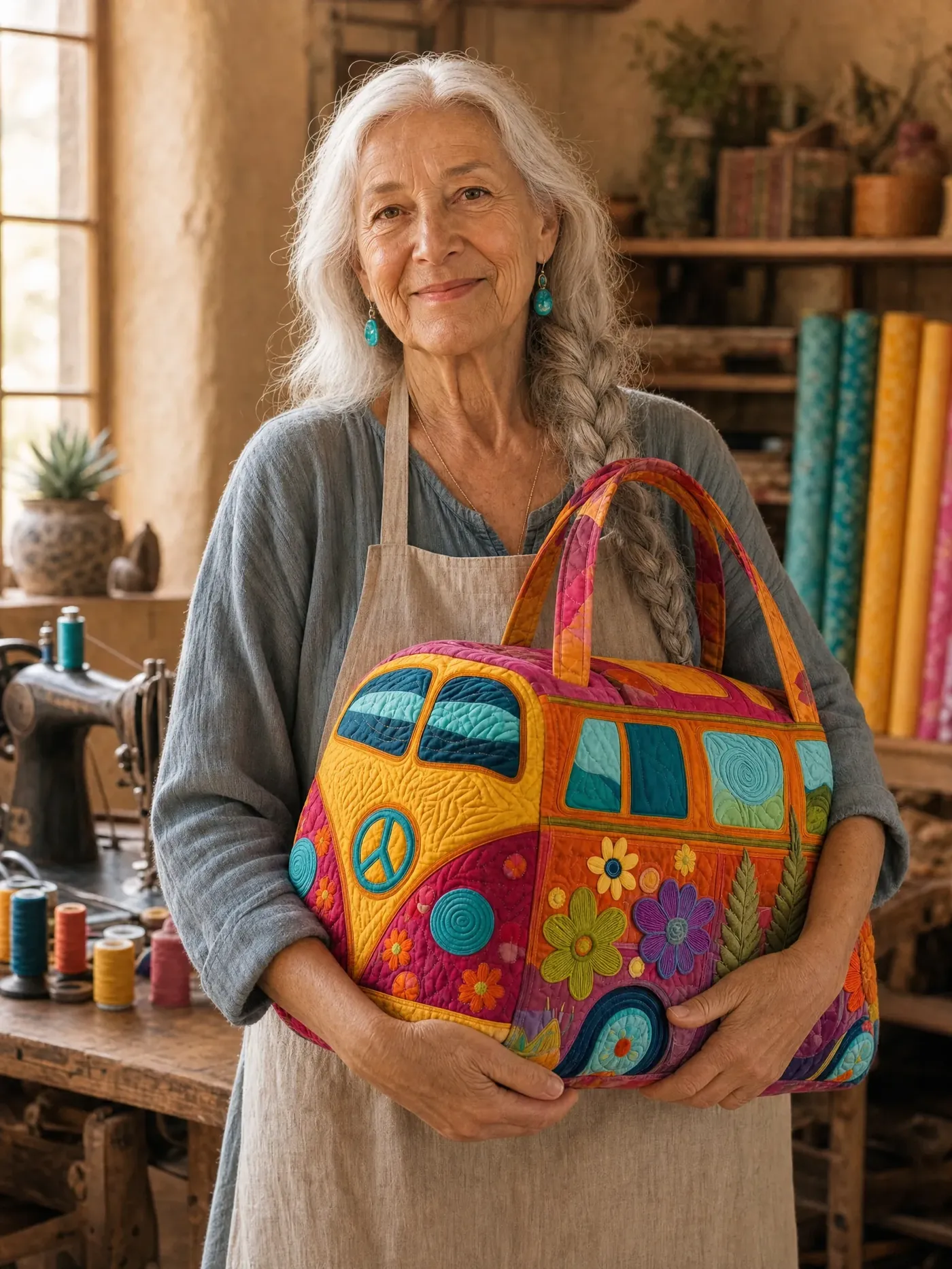
Rosie Delgado rode one down the Baja coast in 1973, at 21, and came home to Taos with a cedar box of market fabric. In 1986 she used it to quilt a bag for a friend's cross-country drive, bus on the front, on her mother's industrial Singer.
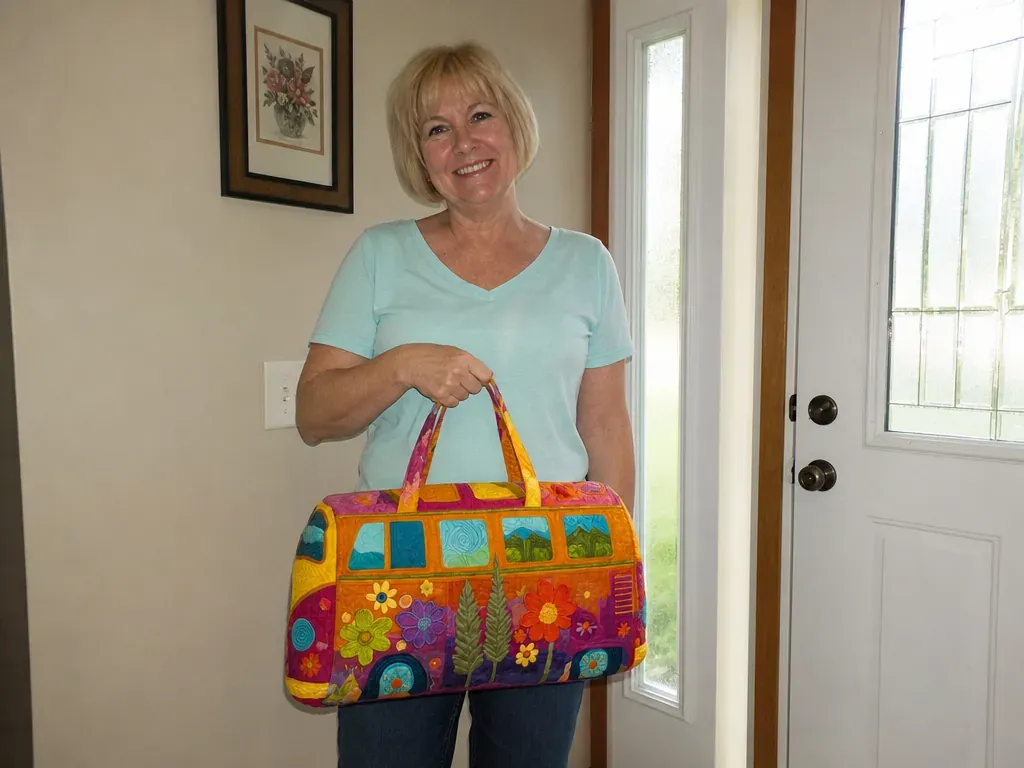
The bus on the HippieBus Weekender wears a peace sign where the VW badge would normally go, and that detail comes straight from the era. In the U.S. the Type 2 was referred to by some as a hippie van or bus because it was used to haul groups of young people and their camping gear and other supplies to concerts and anti-war rallies. Some owners painted colorful murals on their buses and swapped the VW logo on the front for a peace symbol. When Jerry Garcia died in 1995, Volkswagen even ran an ad with a drawing of the front of a bus with a tear streaming down it.
The bus itself was reportedly the brainchild of Dutch businessman Ben Pon, an importer of Beetles to the Netherlands, who saw a market for a small bus and sketched out his concept in 1947 after seeing a flatbed parts-hauler built on a Beetle chassis at the Volkswagen plant. It collected a pile of nicknames over the years, including the Combi, for combined-use vehicle, and the Splittie, for its split windshield, and in Germany it was known as the Bulli.
Volkswagen's marketing for the new bus was an extension of its Beetle advertising, promoting its simple styling and usefulness as a vehicle for home, work and play. In the United States it was seen as a cost-effective alternative to the family station wagon, and the first VW Westfalia campers were exported to the U.S. in 1956, outfitted with beds, sinks and more.
There's a nice bit of history in that cedar box, too. Quilting can be considered one of the first examples of upcycling, since quilters have historically made extensive use of remnants and offcuts to create new things. The earliest known quilted garment shows up on a carved ivory figure of an Egyptian pharaoh, and in 1924 archaeologists found a quilted floor covering in Mongolia dated to somewhere between 100 BC and 200 AD. The first HippieBus Weekender, made from Baja market scraps, fits right into that tradition.
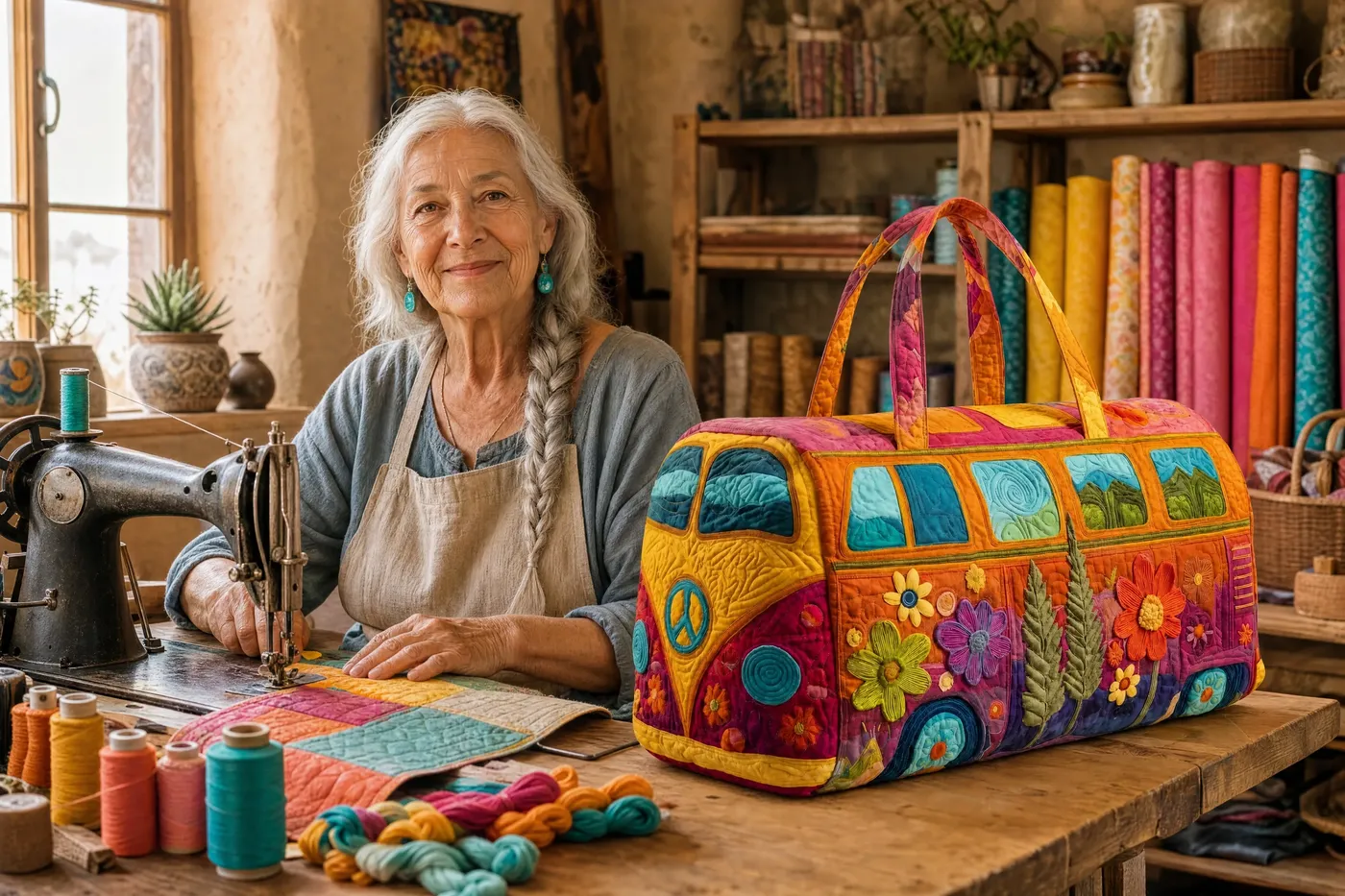
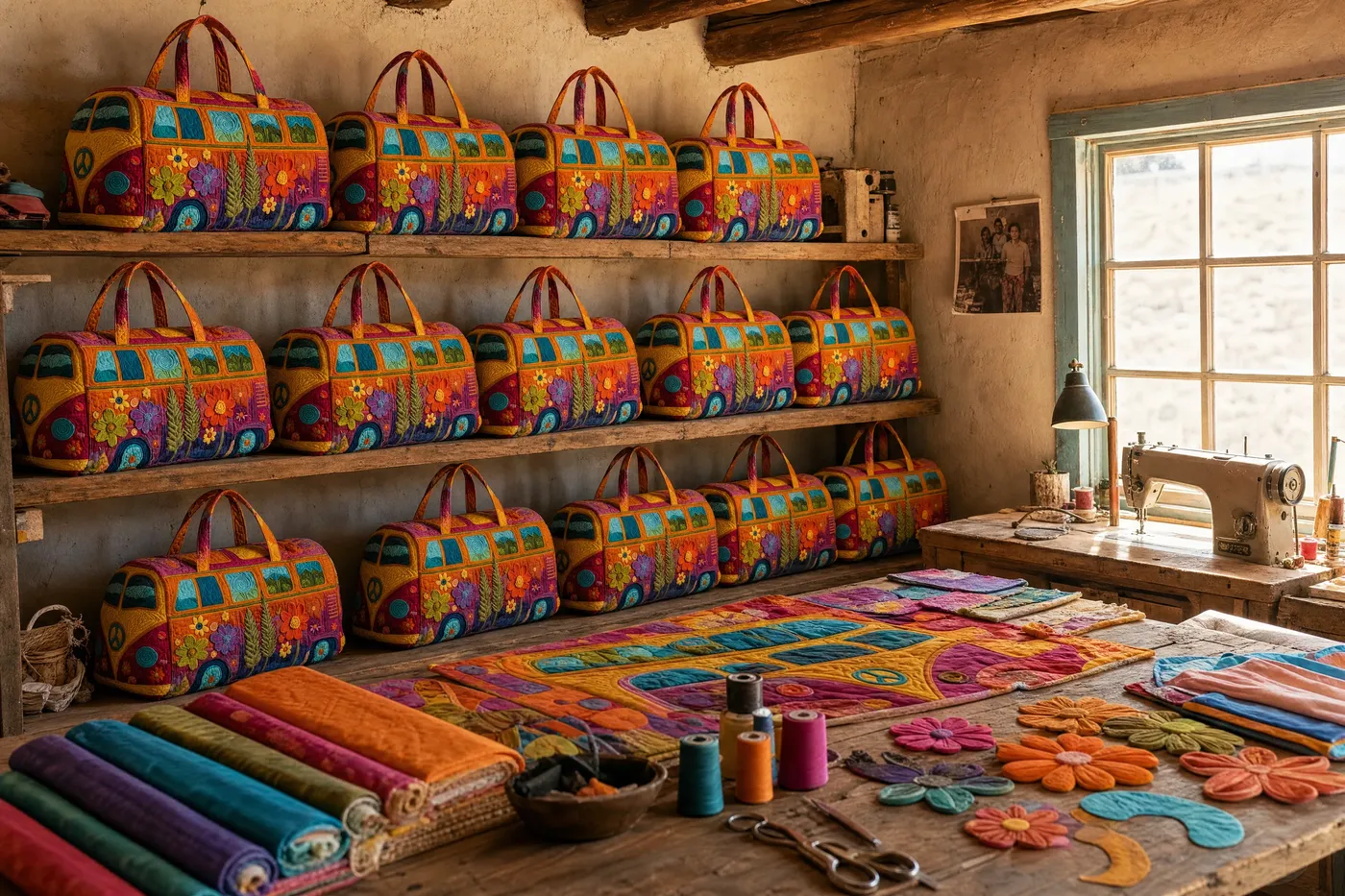
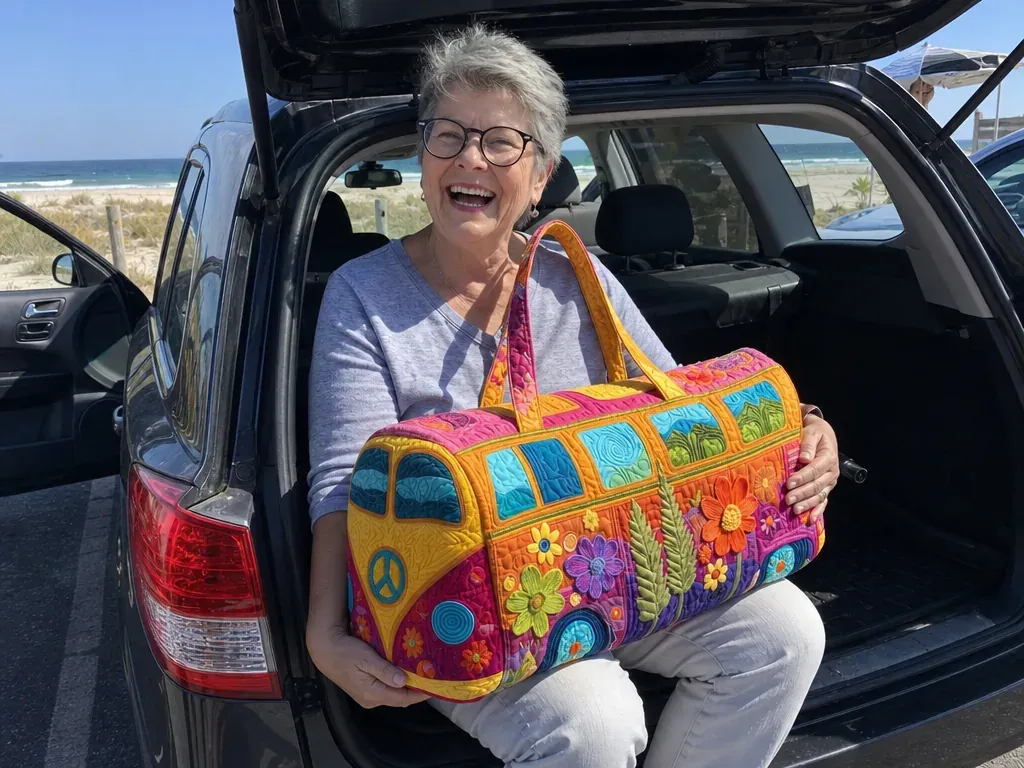
Taos is a fitting home for it. The first artist colony there was established in 1898 by painters Ernest Blumenschein and Bert Phillips, six artists formed the Taos Society of Artists in 1915, and the town has since developed a reputation as a counterculture mecca and a beacon for artists, attracting the likes of Georgia O'Keeffe, D.H. Lawrence and Dennis Hopper. Rosie's first bag got her friend stopped in diners from New Mexico to Ohio, and over the next 39 years a Santa Fe gift shop, a Boulder boutique and later an online shop run by her granddaughter June sold more than 14,000 of them. She is 74 now, has arthritis in most of her knuckles, and after three years without finding a successor she has sewn her last batch of the HippieBus Weekender. About 850 are left and there will be no restock.
About 20 miles northwest of town is the D. H. Lawrence Ranch, originally known as the Kiowa Ranch and now owned by the University of New Mexico, where the English novelist lived in the 1920s. Closer in, the homes and studios of the old Taos painters, such as the Ernest L. Blumenschein House and the Nicolai Fechin House, are listed on the National Register of Historic Places and can still be visited.